Amazon Hearing Aids: A Guide to Finding the Right Device

Affiliate disclosure: Some links on this page are affiliate links. If you buy through them we earn a small commission at no extra cost to you. Recommendations are research-driven; we don't claim personal use of every product reviewed. Product prices and availability are accurate as of the date published and are subject to change. Always check Amazon for current pricing before purchasing. Learn more.
Important:licensed audiologist or hearing healthcare professional
Quick Picks
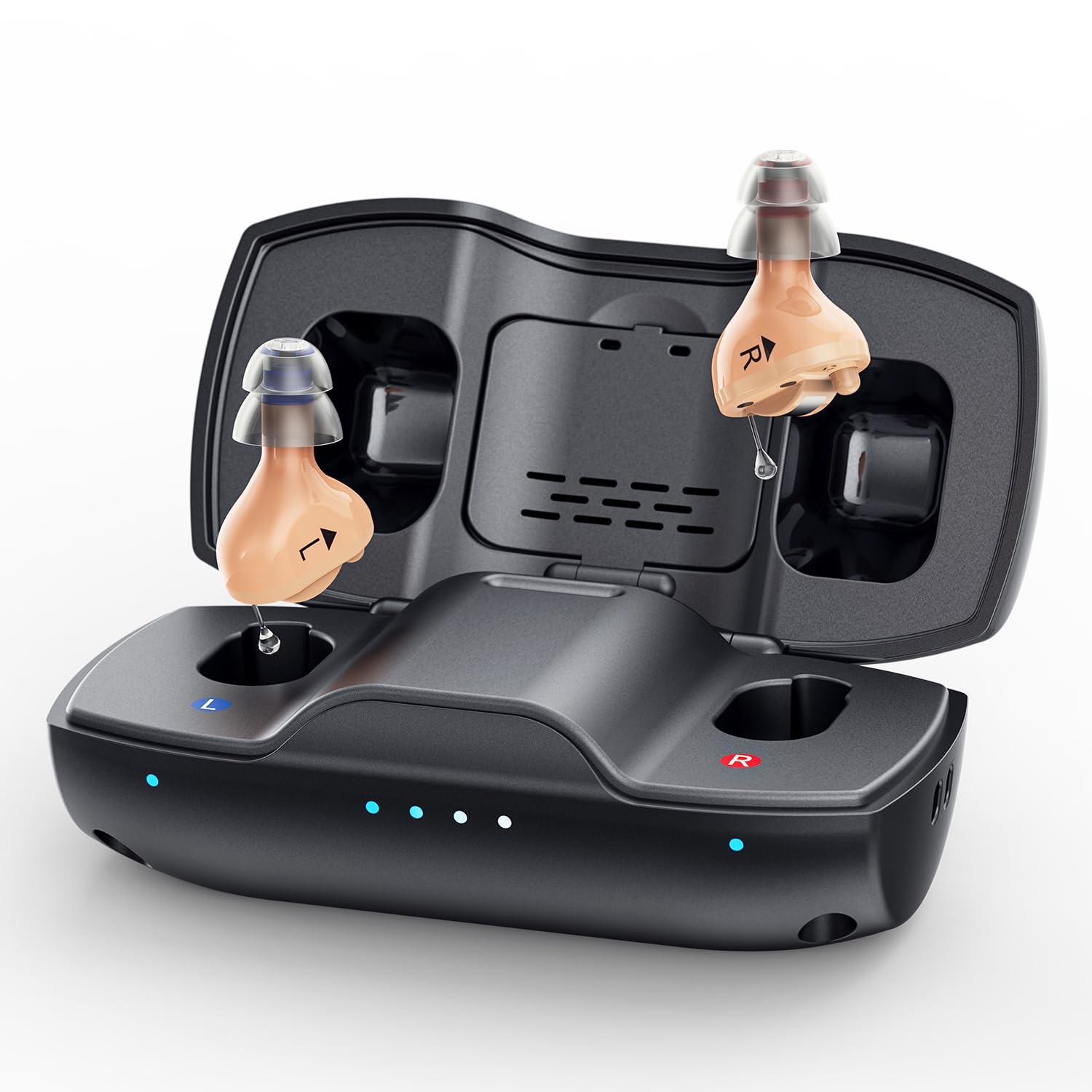
Nova Hearing Aids for Seniors Adults – Superior Sound Quality, Smart Noise Cancelling, No Feedback, Auto On/Off, Rechargeable, with Dryer Department & Anti-Lost Lanyard, Over-the-Counter
Available for purchase without a prescription or audiologist fitting appointment
Buy on AmazonSearching for hearing aids on Amazon feels different from buying headphones or a blood pressure cuff. The options multiply fast, the terminology gets technical quickly, and the stakes feel higher because your ability to hear your grandchildren or follow a conversation at dinner actually depends on the choice. It helps to slow down and understand what you are actually looking at before clicking “add to cart.”
Amazon now sells a full range of over-the-counter (OTC) hearing aids alongside amplifiers and assistive listening devices, and sorting through that mix is one of the first real challenges buyers face. For a broader look at how Amazon fits into the full retail picture, the guide to Hearing Aids at Retail is a useful starting point.
What Amazon Actually Sells: OTC Hearing Aids vs. Amplifiers
This is the single most important distinction to understand before spending any money. The FDA created the OTC hearing aid category in 2022, allowing adults with mild-to-moderate hearing loss to purchase certain devices without a prescription or audiologist visit. True OTC hearing aids are regulated medical devices that meet FDA performance and labeling standards. Personal sound amplification products (PSAPs), by contrast, are not regulated as medical devices and are not intended to treat hearing loss. Both categories appear in Amazon search results, sometimes side by side, and the listings do not always make the difference obvious.
The practical test is to look for explicit FDA OTC hearing aid labeling in the product description. Manufacturer documentation for legitimate OTC devices will state clearly that the product is an OTC hearing aid intended for adults 18 and older with perceived mild-to-moderate hearing loss. If a listing calls a product a “sound amplifier,” a “hearing amplifier,” or a “personal sound amplification product,” it is not an OTC hearing aid, regardless of how the packaging looks or how the reviews read.
Why the Distinction Matters for Your Hearing Health
Audiologists writing in The Hearing Journal have consistently emphasized that amplifying all sound equally, which is what most PSAPs do, is not the same as amplifying the specific frequencies a person has lost. Most hearing loss is not flat across frequencies. High-frequency loss, the kind that makes speech sound muffled rather than simply quiet, requires frequency-specific amplification to address. A PSAP that turns up everything can actually make some sounds uncomfortably loud while still leaving speech intelligibility poor.
That said, PSAPs are not useless for everyone. For someone with very mild difficulty hearing in specific situations, a low-cost amplifier might provide enough benefit to justify the price. The key is knowing which category you are buying and matching it honestly to your situation.
How Amazon OTC Hearing Aids Fit Your Level of Hearing Loss
OTC hearing aids sold on Amazon are legally and practically limited to mild-to-moderate hearing loss. This is not a marketing caveat. It is an FDA requirement built into the OTC category. If an audiologist or hearing test has identified moderate-to-severe, severe, or profound hearing loss, OTC devices, including those sold on Amazon, are not the appropriate tool. That level of loss requires prescription devices fitted and programmed by a licensed audiologist.
Moderate-to-severe and above is also where my mother Ruth’s experience becomes relevant. Her Phonak Audeo devices were prescribed and fitted by an audiologist after her 2019 diagnosis. When she added a Jabra Enhance Pro as an OTC backup in 2022, she and her audiologist discussed whether OTC was appropriate at all for her profile. The consensus was that it was borderline, and the OTC device worked adequately as a backup in quieter environments but was not a substitute for her prescription aids. That experience made clear to me how important it is to know your actual loss level before choosing a channel.
If you have not had a formal hearing evaluation, many audiologists and some retail hearing centers offer baseline screenings. Online hearing screeners can also give a rough directional signal, though they are not a substitute for clinical testing.
Buying Guide: What to Evaluate Before You Buy Hearing Aids on Amazon
For a full picture of how different retail channels compare on service, price, and fitting support, the overview of where people buy hearing aids covers the landscape in detail.
Understanding Your Hearing Loss Profile
Before evaluating any specific product, it helps to know where your loss falls on the spectrum. Mild loss typically means difficulty hearing soft sounds or speech in noisy environments. Moderate loss means difficulty with normal conversational speech even in quiet settings. If you have an audiogram from a recent hearing test, the numbers on that document tell you exactly which frequencies are affected and by how much. OTC hearing aids are designed for people whose loss falls in the mild-to-moderate range across most frequencies.
Without that information, the risk is buying a device that is either underpowered for your actual loss or, less commonly, more amplification than you need in certain frequencies.
Evaluating App Control and Self-Fitting Features
Many OTC hearing aids sold on Amazon include companion smartphone apps that allow users to adjust volume, change listening programs, and run a basic self-fitting process. Owner reviews on Hearing Tracker indicate that the quality of these apps varies significantly between brands. Some apps guide users through a tone-based hearing assessment and use the results to configure amplification automatically. Others offer only manual volume and tone controls.
The self-fitting process, even when app-guided, is less precise than audiologist programming. It can, however, provide meaningful customization for someone who has a reasonably simple, symmetric hearing loss and is comfortable with a smartphone.
Checking Return Policies Before You Buy
Amazon’s general return window is 30 days for most products, but hearing aid listings sometimes carry different terms. Manufacturer documentation and seller policies on individual listings can vary. Before purchasing, scroll to the returns and warranty section of the product listing and confirm the window explicitly. Hearing aids often require an adjustment period of two to four weeks before a user can accurately assess whether a device is working for them, so the length of the return window matters.
Noise Cancellation Claims: What They Mean in Practice
Listings for Amazon hearing aids frequently highlight noise cancellation or noise reduction as a key feature. Field reports from the Hearing Tracker community suggest that noise reduction performance in the OTC price range is real but limited compared to premium prescription devices. Most OTC hearing aids use digital signal processing to reduce steady-state background noise, such as HVAC hum or crowd noise, but struggle more with dynamic, rapidly changing noise environments like busy restaurants.
If restaurant performance is the primary goal, it is worth reading verified buyer reviews specifically from people who mention restaurant or group dining use, rather than relying on manufacturer feature descriptions alone.
Rechargeable vs. Disposable Battery Options
Most current OTC hearing aids on Amazon offer rechargeable batteries, which eliminate the ongoing cost and manual dexterity requirement of disposable batteries. For older adults with arthritis or reduced fine motor control, rechargeable devices are generally easier to manage. Manufacturer documentation for rechargeable models typically states the expected charge cycle life, usually several hundred full charges, and the daily runtime per charge. Verified buyers frequently comment on real-world battery life in reviews, and those reports are worth checking against manufacturer claims.
Top Picks
Nova Hearing Aids for Seniors Adults
The Nova Hearing Aids for Seniors Adults is positioned as an OTC solution for adults with mild-to-moderate hearing loss who want a self-fitting option without a prescription or clinic appointment. Manufacturer documentation states that the device includes smart noise cancellation processing, automatic on/off activation, and a rechargeable battery system. The package also includes a dryer compartment and an anti-lost lanyard, two practical additions that owner reviews on Hearing Tracker and Amazon verified buyer sections tend to call out positively, particularly for users who are new to hearing aids and concerned about care and handling.
The self-fitting adjustment is handled through a smartphone app, which allows users to tune amplification levels based on their self-assessed hearing needs. Verified buyers note that the app setup process is relatively straightforward, though some users with limited smartphone familiarity report a learning curve in the initial configuration. The noise cancellation feature draws consistent mention in owner reviews, with users describing improved clarity in moderate-noise environments like living rooms with television background noise or small group conversations.
On limitations, the Nova is appropriate only for mild-to-moderate loss. Manufacturer documentation is explicit that the device is not intended for severe or profound hearing loss, and owner feedback from users who later discovered their loss was more significant than they realized reflects that the device underperformed their expectations in those cases. The self-fitting process, while useful, does not replicate the precision of an audiologist-programmed device for complex or asymmetric hearing profiles. For a buyer who knows their loss is mild to moderate, symmetric, and has been confirmed by at least a basic hearing screening, the Nova offers a budget-accessible entry point into OTC amplification with practical daily-use features.
Check current price on Amazon.
Closing Thoughts
Amazon has become a legitimate and accessible channel for OTC hearing aids, but the buying process rewards patience and a little groundwork. Knowing your loss level, understanding the FDA distinction between OTC hearing aids and amplifiers, and reading verified buyer reviews for specific use cases (restaurants, phone calls, television) all improve the odds of a purchase that actually helps. For buyers who want to compare the Amazon channel to other retail options including audiologist offices, big-box retailers, and direct-to-consumer brands, the full breakdown at Hearing Aids at Retail covers the tradeoffs in detail.
Frequently Asked Questions
Are hearing aids sold on Amazon real hearing aids or just amplifiers?
Both categories appear on Amazon, which is part of what makes the search process confusing. True OTC hearing aids are FDA-regulated medical devices intended for adults with mild-to-moderate hearing loss. Personal sound amplification products are not regulated as medical devices and are not intended to treat hearing loss. Manufacturer documentation on a legitimate OTC hearing aid listing will explicitly state FDA OTC hearing aid status.
Can I buy hearing aids on Amazon if I have moderate-to-severe hearing loss?
OTC hearing aids, including those available on Amazon, are FDA-cleared only for mild-to-moderate hearing loss. Moderate-to-severe, severe, and profound hearing loss require prescription devices that are programmed by a licensed audiologist based on a full clinical audiogram. Purchasing an OTC device for a loss level beyond its intended range typically results in inadequate amplification and sometimes discomfort. A formal hearing evaluation from an audiologist is the appropriate first step if you are unsure of your loss level.
How does self-fitting through an app compare to audiologist programming?
App-guided self-fitting allows users to adjust volume and frequency emphasis based on a simplified hearing assessment run through their smartphone. Audiologists writing in The Hearing Journal note that clinical programming accounts for far more variables, including ear canal acoustics, word recognition scores, and the specific pattern of frequency loss across both ears. Self-fitting works reasonably well for mild, symmetric loss with straightforward profiles. For complex, asymmetric, or steeply sloping loss patterns, the difference between app-based and clinical programming is meaningful.
What should I check before buying hearing aids on Amazon?
Confirm that the product is explicitly labeled as an FDA OTC hearing aid rather than an amplifier. Check the return policy on the specific listing, since 30 days is common but not universal. Read verified buyer reviews for mentions of the specific listening situations most important to you, such as restaurants, phone calls, or television. Verify that your loss level is mild to moderate before purchasing, ideally through a formal or screener-based hearing assessment.
Does Amazon offer any service or fitting support after purchase?
Amazon itself does not provide hearing care services. Some OTC hearing aid brands sold through Amazon offer remote support via app or phone, and manufacturer documentation will describe what post-purchase support is available. This is one meaningful difference between the Amazon channel and purchasing from an audiologist or a retailer like Costco, where in-person fitting and follow-up adjustments are part of the purchase. Buyers who anticipate needing ongoing fitting support may find a channel with built-in service better suited to their needs.
Where to Buy
Nova Hearing Aids for Seniors Adults – Superior Sound Quality, Smart Noise Cancelling, No Feedback, Auto On/Off, Rechargeable, with Dryer Department & Anti-Lost Lanyard, Over-the-CounterSee Nova Hearing Aids for Seniors Adults … on Amazon