OTC Hearing Aids: What You Need to Know Before Buying

Affiliate disclosure: Some links on this page are affiliate links. If you buy through them we earn a small commission at no extra cost to you. This never influences which products we recommend — we only suggest things we'd buy ourselves. Product prices and availability are accurate as of the date published and are subject to change. Always check Amazon for current pricing before purchasing. Learn more.

Quick Picks
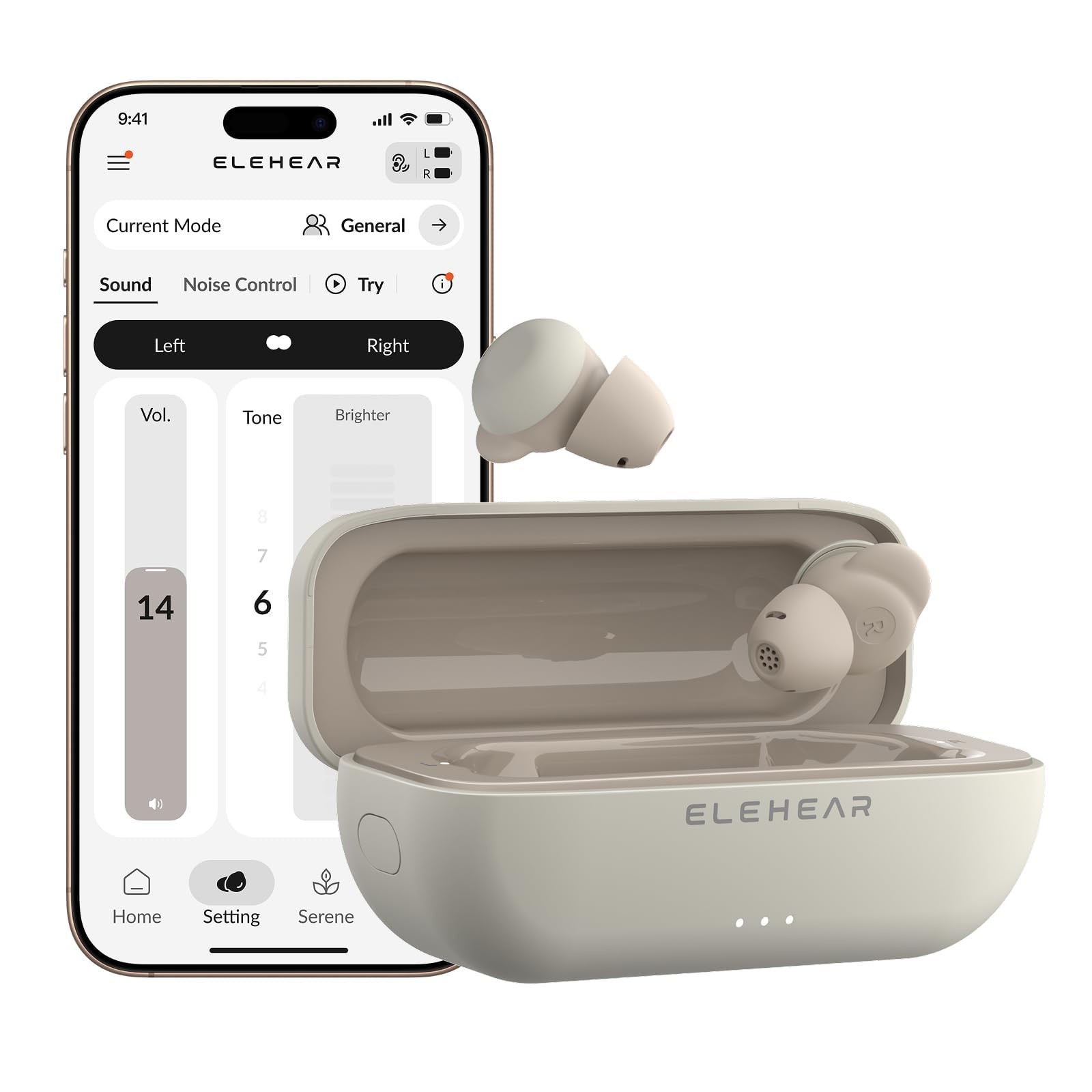
ELEHEAR-Delight OTC Hearing Aids for Seniors and Adults, AI Powered Speech Enhancement, Superior Sound Quality, Comfortable & Discreet Design, Bluetooth 5.3 and App Control, Mist White
Available for purchase without a prescription or audiologist fitting appointment
Buy on AmazonHearing aids used to mean a prescription, a waiting room, and a bill that could strain almost any retirement budget. The 2022 FDA rule that created the over-the-counter hearing aid category changed that equation significantly, and millions of adults with mild-to-moderate hearing loss now have a direct purchase path that skips the clinic entirely.
That shift is genuinely good news, but the OTC category is also crowded and confusing. Understanding what separates a well-designed device from a basic amplifier, and knowing when OTC is actually appropriate, matters before any purchase decision. The OTC Hearing Aid Buyers Guide covers the full landscape; the sections below focus specifically on how to evaluate what you are reading.
What “OTC Hearing Aid” Actually Means
The term gets used loosely, so a quick clarification helps. The FDA formally defined over-the-counter hearing aids in August 2022 as devices intended for adults 18 and older with perceived mild-to-moderate hearing loss. They can be purchased without a medical exam, prescription, or audiologist fitting. That is the legal definition, and it is meaningfully different from personal sound amplification products (PSAPs), which are not classified as hearing aids at all and cannot legally make hearing-health claims.
Devices that carry the FDA OTC hearing aid classification are subject to output limits, labeling requirements, and a required self-fitting range. Verified buyers on Hearing Tracker forums frequently note that understanding this classification is the first thing that clears up confusion about why some inexpensive ear-worn devices seem similar but carry different regulatory language.
Why Moderate-to-Severe Loss Is a Different Conversation
Audiologists writing in The Hearing Journal have consistently drawn a clear line: OTC devices are engineered for mild-to-moderate loss, and that ceiling is not arbitrary. The self-fitting ranges permitted under FDA rules are calibrated for that population. Someone whose audiogram shows severe or profound loss needs amplification levels, frequency shaping, and in many cases directional microphone arrays that go beyond what OTC devices are designed or legally permitted to deliver.
My mother Ruth’s 2019 diagnosis placed her in moderate-to-severe territory, which is exactly why her primary device has always been a prescription Phonak Audeo fitted by an audiologist in Sacramento. Her Jabra Enhance Pro fills a backup role where its OTC-class performance is sufficient, but it is not her primary instrument. That practical distinction, prescription versus OTC as primary versus backup, is worth keeping in mind as you read.
Who Is a Good Candidate for OTC Hearing Aids
The Self-Assessment Starting Point
The FDA’s OTC framework puts the initial determination of hearing loss severity on the consumer, and that is both a freedom and a responsibility. Signs associated with mild-to-moderate loss include difficulty following conversation in noisy restaurants, asking people to repeat themselves in normal-volume settings, missing parts of phone calls, or turning television volume higher than others in the room prefer. These are the use cases where owner reports on Hearing Tracker consistently show OTC devices delivering meaningful benefit.
If someone is missing entire conversations even in quiet rooms, cannot hear a smoke alarm, or has never had a hearing evaluation and is unsure of their loss level, an audiologist visit before purchasing any device, OTC or otherwise, is the more appropriate starting point.
Age and Cognitive Load Considerations
Demographic research published in Hearing Review notes that first-time hearing aid users of any age face an adaptation period. For older adults, that period can be longer and more effortful. OTC devices that rely heavily on smartphone app control require a reasonable level of comfort with mobile technology. That is not a statement about capability; it is a practical observation about daily friction.
Some OTC devices offer manual controls, physical buttons, or simplified companion apps. Others require the app for nearly all adjustments. Buyers who are not comfortable managing Bluetooth connections and app interfaces should weight that factor heavily when comparing options.
The Bilateral Loss Question
Most adults with age-related hearing loss experience it in both ears. Audiologist consensus, reflected in ASHA guidance, is that bilateral fitting (one device per ear) produces better outcomes for most people: improved speech understanding in noise, better sound localization, and less listening fatigue. Most OTC devices are sold in pairs and priced accordingly. If a listing shows a single unit price, confirming whether that covers one or two devices before purchasing is essential.
When to Return to the Clinic
The OTC Hearing Aid Buyers Guide addresses this directly: OTC is not a permanent substitute for audiological care for everyone. If a device purchased OTC produces discomfort, distorted sound, feedback that cannot be resolved through app adjustments, or simply insufficient amplification after a reasonable trial period, those are signals that the device may be mismatched for that individual’s loss profile. Most reputable OTC sellers offer return windows; checking the return policy before purchase is always worth the two minutes it takes.
Realistic Outcome Expectations
Manufacturer documentation for OTC devices often references listening environments like restaurants, phone calls, and television, and those are legitimate outcome targets for mild-to-moderate loss. Field reports from the Hearing Tracker community suggest that most satisfied OTC users see the clearest benefit in one-on-one conversation and television volume reduction. Crowded, highly reverberant environments, large family gatherings, conference rooms, auditoriums, tend to be more challenging even for well-fitted prescription devices.
Setting realistic expectations before purchase protects against disappointment. OTC hearing aids are not a clinical solution for complex hearing profiles; they are a meaningful access point for a large population that previously had no affordable, low-friction option at all.
Top Picks
ELEHEAR-Delight OTC Hearing Aids
The ELEHEAR-Delight OTC Hearing Aids for Seniors and Adults represents the newer wave of app-controlled, AI-assisted OTC devices entering the market at an accessible price band. The product’s primary differentiating claims center on AI-powered speech enhancement and Bluetooth 5.3 connectivity, both of which reflect where the broader OTC category has moved since the initial 2022 FDA rule opened the market.
Manufacturer documentation states that the device is intended for adults with mild-to-moderate hearing loss and pairs with a companion smartphone app for self-fitting adjustments. The Bluetooth 5.3 specification is a meaningful upgrade over older Bluetooth 4.x implementations found in earlier OTC devices: battery overhead is lower, connection stability is generally improved, and latency is reduced in streaming applications. For users who primarily want to improve phone call clarity or stream audio from a mobile device, that specification matters in a practical way.
The AI speech enhancement feature is worth examining with appropriate calibration. “AI-powered” in hearing aid marketing covers a wide range of actual implementations. At the premium end of the prescription market, machine learning models process environmental audio in real time, classify listening environments, and adjust gain and frequency response dynamically. At the OTC price band, AI labeling more typically refers to digital signal processing algorithms that apply fixed or limited-adaptive noise reduction. Owner reviews on Hearing Tracker for devices in this category and price tier generally report noticeable improvement in quiet-to-moderate noise environments, with more mixed results in highly dynamic or loud settings.
The self-fitting app control is a genuine advantage for users who want to personalize amplification without a clinic visit. The limitation, which is common to the entire OTC category and not specific to ELEHEAR, is that self-fitting is less precise than audiologist programming for anyone with an asymmetric loss profile, a complex audiogram shape, or specific frequency contours that require professional calibration. For straightforward mild-to-moderate bilateral loss, the self-fitting approach is workable, and the ability to adjust from a smartphone rather than returning to a provider represents real convenience.
The Mist White colorway and the described discreet design suggest a receiver-in-canal or similar form factor oriented toward wearers who prefer low visibility. Comfortable extended wear is consistently cited as a purchasing priority in buyer surveys, and the product description’s emphasis on comfort is a relevant consideration for anyone who anticipates wearing devices for eight or more hours daily.
Who this fits: adults with self-assessed mild-to-moderate hearing loss who are comfortable with smartphone apps, want Bluetooth streaming capability, and prefer to purchase without a clinic appointment. Who should look elsewhere: anyone with moderate-to-severe or severe loss, or anyone who is not comfortable managing Bluetooth pairing and app-based controls as part of daily device use.
Check current price on Amazon.
How to Compare OTC Hearing Aids Before You Buy
The product section above covers one specific device, but most buyers will encounter a range of options across search results and retail listings. A structured comparison approach reduces the risk of choosing on price alone.
Start with loss level confirmation. If you or your family member has never had a hearing test, many audiology clinics, some pharmacies, and online services offer basic screenings at low or no cost. Knowing whether loss is genuinely in the mild-to-moderate range, rather than assuming it, changes the decision.
Next, evaluate app dependency honestly. Devices that require smartphone app management for core functions are excellent for tech-comfortable buyers and frustrating for those who prefer physical controls. Product listings and manufacturer documentation typically specify what adjustments require the app versus what can be managed on the device itself.
Check the trial and return policy before completing any purchase. The OTC category lacks the built-in trial period that many audiologist-dispensed devices include by practice convention. Retailer return windows vary from 15 days to 45 days or more. Verified buyers on hearing forums frequently note that 15 days is tight for full adaptation.
Finally, consider the accessory ecosystem. Charging cases, replacement domes, wax guards, and cleaning tools are ongoing costs. Devices from brands with established distribution tend to have more accessible accessory supply than newer entrants.
Frequently Asked Questions
Are OTC hearing aids as good as prescription hearing aids?
OTC hearing aids are appropriate for mild-to-moderate hearing loss and deliver meaningful benefit within that range. Prescription devices offer more precise audiologist programming, broader fitting ranges, and clinical follow-up that OTC devices do not include. Audiologists writing in The Hearing Journal note that for complex or severe loss profiles, the clinical fitting process produces outcomes that self-fitting cannot replicate. For straightforward mild-to-moderate loss, the gap between OTC and entry-level prescription devices has narrowed considerably since 2022.
Can seniors use OTC hearing aids without help from family members?
Many seniors use OTC hearing aids independently, particularly devices that include physical controls alongside app options. The primary friction point noted in owner reviews on Hearing Tracker is Bluetooth pairing and app setup during initial configuration. For buyers who are not comfortable with smartphone apps, selecting a device that offers manual volume and program controls on the hearing aid itself reduces dependence on the companion app for daily use.
What is the difference between OTC hearing aids and hearing amplifiers?
OTC hearing aids are FDA-classified medical devices subject to specific output limits, labeling requirements, and intended for adults with perceived mild-to-moderate hearing loss. Hearing amplifiers, also called personal sound amplification products or PSAPs, are not classified as medical devices and cannot legally claim to address hearing loss. Manufacturer documentation and product labeling will indicate which category a device falls into. Buying a PSAP when you need a hearing aid is a common and avoidable mismatch.
How do I know if my hearing loss is mild, moderate, or severe?
Severity is measured in decibels of hearing loss across frequencies and formally determined by an audiologist through a hearing evaluation called an audiogram. Mild loss generally refers to difficulty hearing soft sounds; moderate loss involves difficulty with normal conversational speech; severe loss significantly affects most speech understanding even in quiet. Without an audiogram, self-assessment is imprecise. If there is meaningful uncertainty about loss level, a professional evaluation before purchasing any device is the more reliable starting point.
Do OTC hearing aids work for tinnitus?
Some OTC hearing aids include sound masking or tinnitus relief features, and manufacturer documentation for individual devices will specify whether this is included. Amplification alone, which improves audibility of environmental sounds, can provide indirect tinnitus relief for some users by reducing the contrast between ambient sound and the perceived ringing. However, formal tinnitus management, including sound therapy protocols, is typically provided through audiological care rather than OTC devices. Anyone whose primary complaint is tinnitus rather than speech understanding difficulty should discuss options with an audiologist before purchasing.
<script type="application/ld+json">
{
 "@context": "https://schema.org",
 "@type": "FAQPage",
 "mainEntity": [
 {
 "@type": "Question",
 "name": "Are OTC hearing aids as good as prescription hearing aids?",
 "acceptedAnswer": {
 "@type": "Answer",
 "text": "OTC hearing aids are appropriate for mild-to-moderate hearing loss and deliver meaningful benefit within that range. Prescription devices offer more precise audiologist programming, broader fitting ranges, and clinical follow-up that OTC devices do not include. Audiologists writing in The Hearing Journal note that for complex or severe loss profiles, the clinical fitting process produces outcomes that self-fitting cannot replicate. For straightforward mild-to-moderate loss, the gap between OTC and entry-level prescription devices has narrowed considerably since 2022."
 }
 },
 {
 "@type": "Question",
 "name": "Can seniors use OTC hearing aids without help from family members?",
 "acceptedAnswer": {
 "@type": "Answer",
 "text": "Many seniors use OTC hearing aids independently, particularly devices that include physical controls alongside app options. The primary friction point noted in owner reviews on Hearing Tracker is Bluetooth pairing and app setup during initial configuration. For buyers who are not comfortable with smartphone apps, selecting a device that offers manual volume and program controls on the hearing aid itself reduces dependence on the companion app for daily use."
 }
 },
 {
 "@type": "Question",
 "name": "What is the difference between OTC hearing aids and hearing amplifiers?",
 "acceptedAnswer": {
 "@type": "Answer",
 "text": "OTC hearing aids are FDA-classified medical devices subject to specific output limits, labeling requirements, and intended for adults with perceived mild-to-moderate hearing loss. Hearing amplifiers, also called personal sound amplification products or PSAPs, are not classified as medical devices and cannot legally claim to address hearing loss. Manufacturer documentation and product labeling will indicate which category a device falls into. Buying a PSAP when you need a hearing aid is a common and avoidable mismatch."
 }
 },
 {
 "@type": "Question",
 "name": "How do I know if my hearing loss is mild, moderate, or severe?",
 "acceptedAnswer": {
 "@type": "Answer",
 "text": "Severity is measured in decibels of hearing loss across frequencies and formally determined by an audiologist through a hearing evaluation called an audiogram. Mild loss generally refers to difficulty hearing soft sounds; moderate loss involves difficulty with normal conversational speech; severe loss significantly affects most speech understanding even in quiet. Without an audiogram, self-assessment is imprecise. If there is meaningful uncertainty about loss level, a professional evaluation before purchasing any device is the more reliable starting point."
 }
 },
 {
 "@type": "Question",
 "name": "Do OTC hearing aids work for tinnitus?",
 "acceptedAnswer": {
 "@type": "Answer",
 "text": "Some OTC hearing aids include sound masking or tinnitus relief features, and manufacturer documentation for individual devices will specify whether this is included. Amplification alone, which improves audibility of environmental sounds, can provide indirect tinnitus relief for some users by reducing the contrast between ambient sound and the perceived ringing. However, formal tinnitus management, including sound therapy protocols, is typically provided through audiological care rather than OTC devices. Anyone whose primary complaint is tinnitus rather than speech understanding difficulty should discuss options with an audiologist before purchasing."
 }
 }
 ]
}
</script>Where to Buy
ELEHEAR-Delight OTC Hearing Aids for Seniors and Adults, AI Powered Speech Enhancement, Superior Sound Quality, Comfortable & Discreet Design, Bluetooth 5.3 and App Control, Mist WhiteSee ELEHEAR-Delight OTC Hearing Aids for … on Amazon